

Evolution of Divine Acoustics Anti-Vibration Technologies
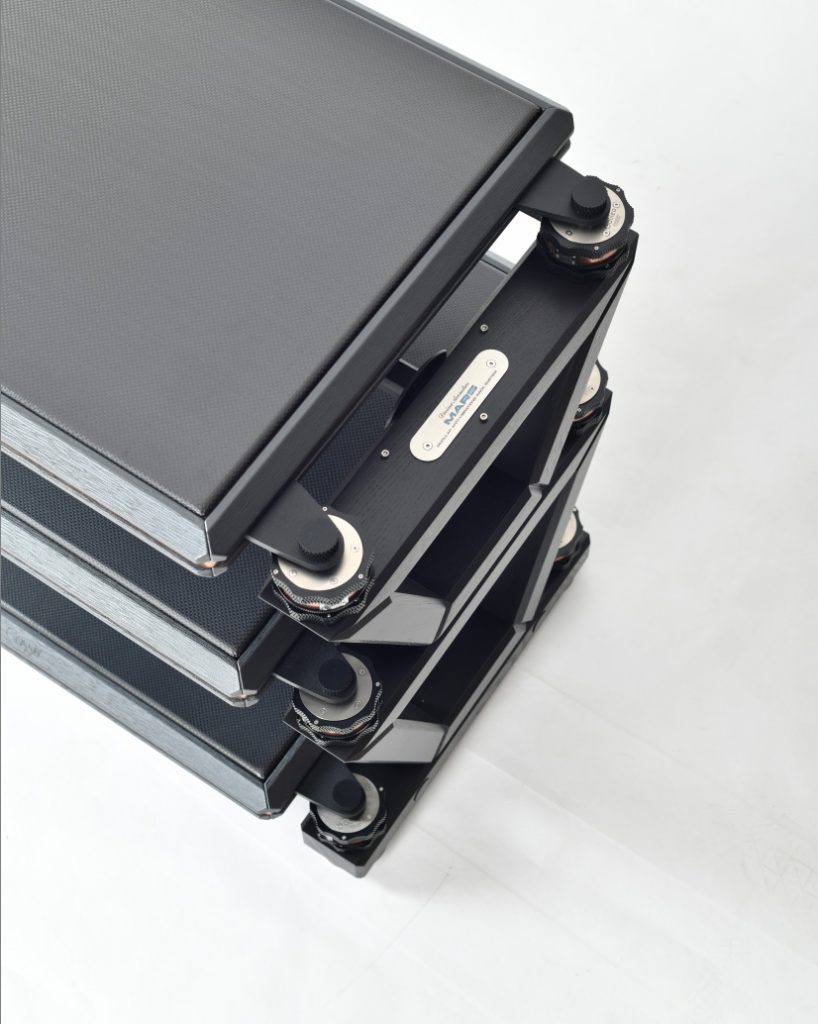
In the world of high-end audio, excellence is born from details.
Even the subtlest vibrations can affect the operation of electronic circuits and mechanical components, thereby limiting the full potential of the system.
Why does vibration control matter so much?
At Divine Acoustics, we believe that exceptional sound quality does not result solely from the class of the electronics used or the precision of the transducers. Its source also lies in the ability to control the energy present in every element of the audio chain.
Transformers, electronic components, enclosures, and the movement of air generated by loudspeakers all create a complex system of interacting vibrations. Their control has a significant impact on the stability of the system’s operation and on the character of music reproduction — its clarity, coherence, and naturalness.
That is why we treat vibration control not as an addition, but as one of the foundations of a consciously designed audio system. At Divine Acoustics, we develop technologies that support its stability and allow the most valuable qualities of music to be fully revealed.

2012 — Gravity
The Beginning of the Search
The Gravity platform was the first anti-vibration accessory developed by Divine Acoustics. For 14 years, it remained in our portfolio, becoming the longest-produced product in the company’s history.
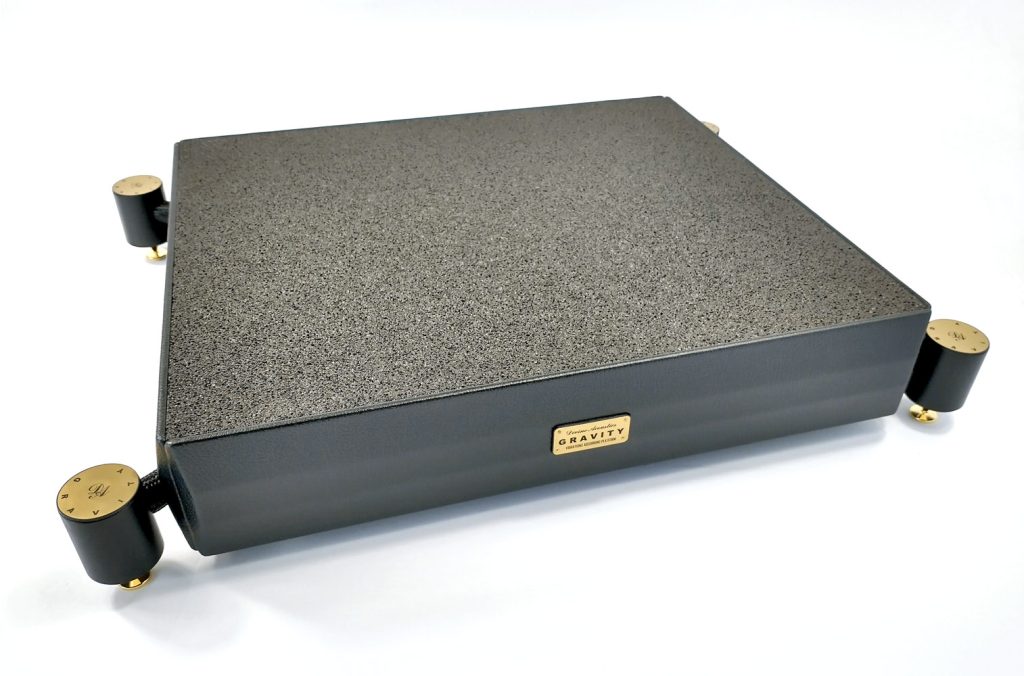
During that time, it underwent subtle stylistic updates, while its fundamental concept remained unchanged. The platform’s construction was based on the use of zirconium dioxide as separating elements between the upper and lower MDF boards, covered with carefully selected damping materials.
The lower board was equipped with damped legs, allowing the entire structure to operate under load — in a way resembling the action of leaf springs in automotive suspension. The platform gently flexed under the weight of the device, continuously compensating for the vibrations generated.
However, this solution had its natural limitations — the platform’s maximum load capacity was 35 kg.
Gravity became something more than just a product for us. It was a laboratory in practice, a place of many years of observation and experimentation with materials and their influence on the behavior of audio systems.
It was there that the path leading to our proprietary technologies began.
2018 — Cooperation of Multiple Materials
The Birth of CeraGem Technology
In 2018, years of research led to the creation of our proprietary CeraGem technology
In our laboratory, we analyzed the properties of dozens of different materials and their mutual interactions. We tested metals and their alloys, ceramics, minerals, and materials with extremely different hardness and elasticity, searching for a structure capable of controlling vibration energy as effectively as possible.
The result of this work was a precisely designed multilayer material structure. Metals, ceramics, rubies, and materials with radically different mechanical properties were assembled into a “damping package,” whose purpose is to control vibration energy in a far more complex way than simple damping.
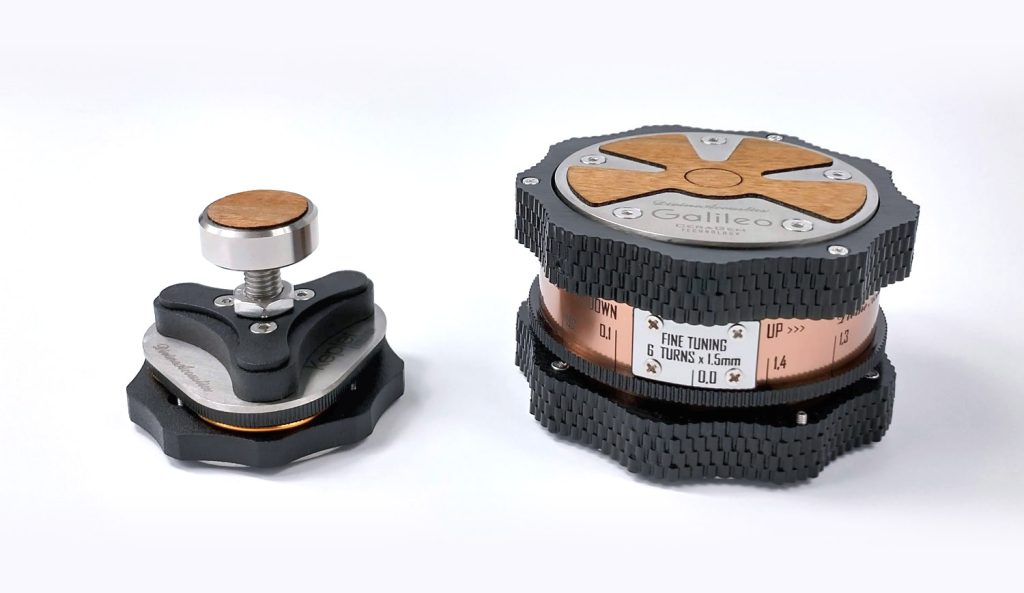
CeraGem does not use popular industry solutions based on ceramic balls, magnets, springs, or bearings. Instead, our proprietary CeraGem technology uses the synergy of materials with different physical properties, creating a system with exceptional damping effectiveness.
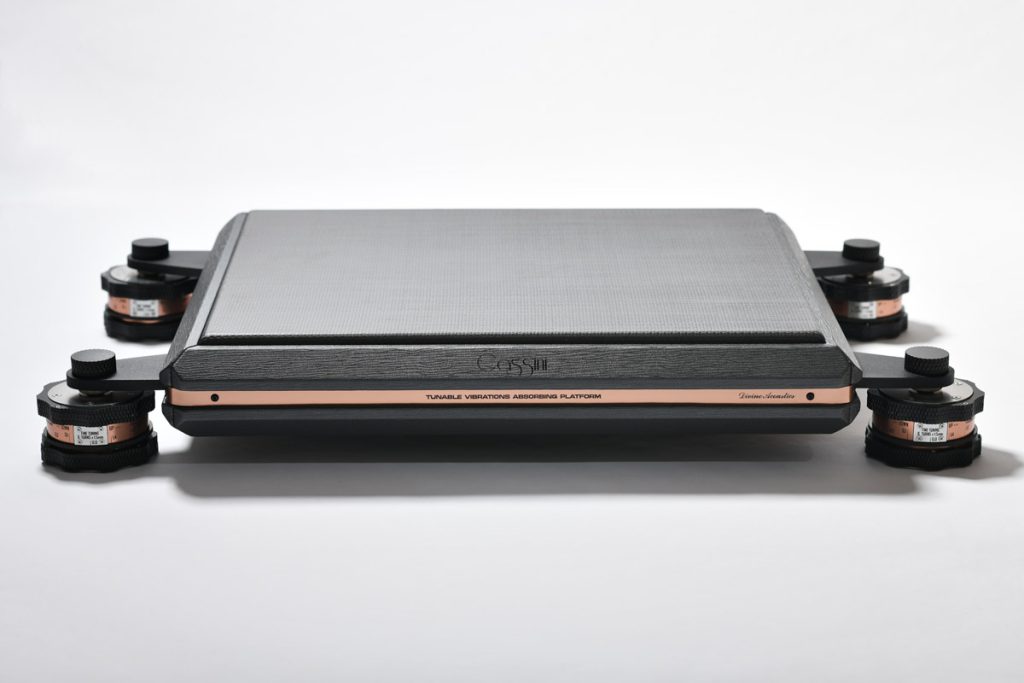
This technology became the foundation of many Divine Acoustics designs — from the Galileo and Kepler EVOLUTION anti-vibration feet, through the Cassini platforms, to the internal structure of the tweeter in the Bellatrix loudspeakers.
2026 — CeraGem D.
The Limits of Material Possibilities
The next stage in the development of our technologies brought an important conclusion. During laboratory research and numerous listening tests, it became clear that to achieve an even higher level of vibration control, it was necessary to reach for the hardest material known to man — diamond. The only material with a hardness of 10 on the Mohs scale.
After months of research and prototype development, we created a way to use diamond as an active element controlling vibration energy.
This is how CeraGem D technology was created.
Microdiamonds were embedded in a specially selected substance with precisely defined viscosity, allowing them to perform micromovements in the horizontal plane while simultaneously keeping them in a stable layer with exactly controlled shape and thickness.
This layer was enclosed between metal plates, enabling it to safely transfer the loads generated by audio devices.
In this way, a system was created that combines the extreme hardness of diamond with the properties of the other materials used in CeraGem technology.
The result is the most advanced microvibration control system we have developed so far.

CeraGem D technology debuted in our latest
Newton DIAMOND anti-vibration footers.
Soon, more anti-vibration accessories using our technology will join them.